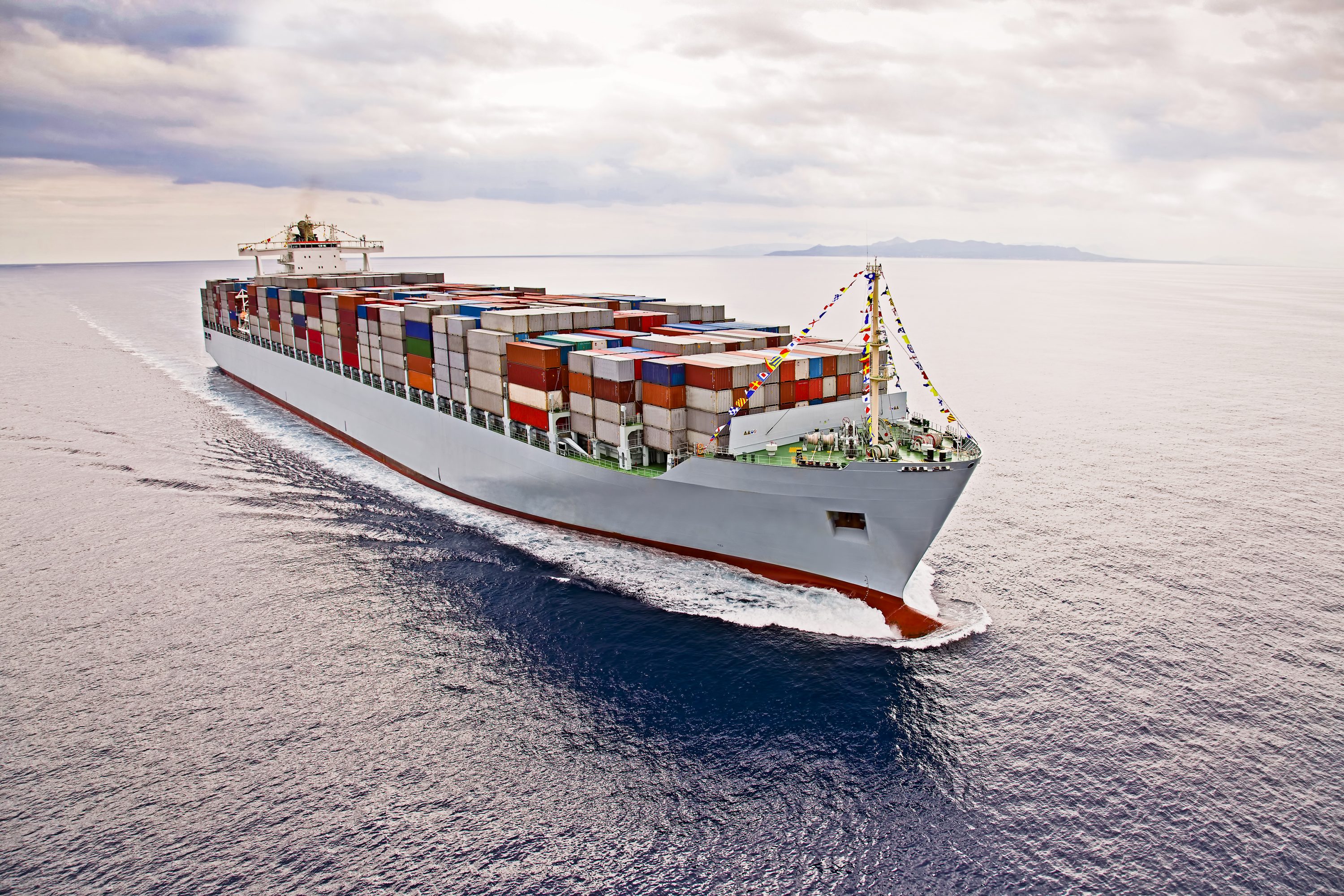
Container ships, also known in the industry as boxships, are the large transport ships that carry containers and good around the world. These ships are getting larger and larger, and this could pose some serious risks for safety of people, environmental disasters, and accidents that could damage ships and cargo. Major marine insurance groups are warning about the safety of Ultra Large Container Vessels, ULCVs, that can hold more than 14,500 TEU, twenty-foot equivalent units.
The Largest Container Ship in the World
On March 15, 2017, Samsung Heavy Industries (SHI) held a naming ceremony for its latest vessel built in South Korea. SHI built the ship, as part of an order of four, for the Japanese shipping company Mitsui O.S.K. Lines (MOL). The first ship completed was christened the MOL Triumph and has a capacity of 20,150 TEU. It is currently the largest boxship in the world. The MOL Triumph is not just enormous; it is also eco-friendly. The ship has several energy-saving components in its design and has reduced the amount of carbon dioxide emitted per container.
The Risks of Going Ultra Large
ULCVs are becoming more the norm than the exception in shipping as companies strive to move more cargo at even lower costs. Insurers and others, though, are warning that there are serious risks to moving goods with such huge vessels, including greater risks of catastrophic accidents. The bigger the ship, the bigger an accident is bound to be.
Some of the risks include more damage to the cargo being transported. Fires, for instance, are thought to be more problematic on these larger vessels. Because they are so big and there are so many containers aboard, the strategy for dealing with a fire in one container is often to just let it burn out. This results in damage to surrounding containers and cargo. The large amount of containers also increases the risks of the cargo being mis-declared. This poses bigger risks for mishandling toxic, flammable, and dangerous cargo.
A fire on board a large cargo ship is also dangerous for the crew on board. It may be impossible to find the source of the fire, and challenging to impossible to sufficiently fight the fire. Depending on what kind of cargo is on board, a fire could quickly get out of control and endanger the lives of the crew.
Insurance companies and others are also worried about the risks of grounding. While any cargo ship can run aground, the consequences of the grounding of an ultra large vessel are much more serious. There may not even be the right equipment available to remedy a grounded vessel the size of the UCLVs. In incidents with groundings of smaller cargo vessels, it is already difficult to recover all of the containers. Repairs to larger vessels may also be challenging to accomplish. The world’s ports and dry docks are not ready to accommodate such big ships. Salvage tugs that can move these ships do not exist.
Finally, the risks of parametric rolling increase with the sizes of these mega ships. Some pitching and rolling on a ship at sea is normal, but container ships are susceptible to parametric rolling, a phenomenon that leads to larger and larger rolls. This puts stress on the ship, the container securing system, and can ultimately lead to a ship capsizing.
As container ships continue to get larger, all of these risks become bigger concerns, putting cargo, ships, and people in harm’s way.